Basement Waterproofing and Insurance: What Homeowners Need to Know

A wet basement creates two problems at once. The first is obvious: water where it should not be. The second usually arrives a few hours later, when a homeowner starts asking who is going to pay for the cleanup, repairs, ruined storage, flooring, drywall, and possibly mold remediation. That is where confusion sets in. Many people assume any water damage is an insurance claim. Many others assume nothing in a basement is covered. Neither view is quite right.
Basement Waterproofing sits at the center of that confusion because it lives in the space between maintenance, prevention, and damage control. Insurance is designed to cover certain sudden and accidental losses. Waterproofing is designed to reduce the chance of those losses in the first place. If you own a home with a basement, especially an older one, you need to understand how those two systems interact long before you smell damp concrete or see water at the bottom step.
I have seen homeowners spend ten thousand dollars waterproofing a basement and then discover their policy would not have covered the original seepage anyway. I have also seen people avoid a five-figure disaster because they had a sump pump, a battery backup, proper exterior drainage, and a rider for sewer backup. The details matter, and they matter more than most people realize.
Why basement water claims are so often disputed
Insurance companies do not look at all basement water the same way. They divide water events into categories, and those categories determine whether a claim gets paid, partly paid, or denied outright. Homeowners, on the other hand, tend to look at the result. If the carpet is soaked and boxes are floating, it feels like damage, and damage feels insurable. Policies do not work from that emotional logic.
The central issue is cause. Did water enter because of a one-time event, such as a burst interior pipe? Did it back up through drains after a heavy storm? Did it seep slowly through foundation walls over months because the exterior grading pitched toward the house and hydrostatic pressure pushed moisture through cracks? Those are very different fact patterns in insurance language.
That distinction frustrates people because the mess looks similar in every case. Yet the policy may treat one event as a covered peril and another as a maintenance issue. Insurers generally expect homeowners to manage grading, gutters, downspouts, foundation cracks, sump pump upkeep, and other preventive measures. That is why Basement Waterproofing is not just a contractor topic. It is a financial risk topic.
The gap between “water damage” and “flood damage”
One of the most expensive misunderstandings comes from the way people use the word flood. In ordinary conversation, flood can mean any large amount of unwanted water. In insurance, flood usually means surface water entering from outside, often from rising water, overflowing bodies of water, or runoff affecting more than one property. Standard homeowners policies often exclude flood damage unless there is separate flood insurance.
That means a basement can fill with water during a major rainstorm and still not be covered under the base homeowners policy if the insurer classifies it as flood or surface water intrusion. If the same storm causes a sump system to fail and the policy includes a water backup endorsement, there may be some coverage, but the terms and limits matter. This is why two neighbors can have nearly identical basement damage and very different claim results.
A common real-life example is a home at the bottom of a sloped lot. During a hard rain, water builds against the foundation wall and enters through a crack. The owner calls it flooding. The carrier may call it seepage or hydrostatic intrusion, which is often excluded. Another homeowner in the same storm has a drain backup into the basement utility room. If that owner purchased sewer or water backup coverage, the claim may be covered up to the endorsement limit. The event felt like the same storm to both households, but the policy language followed the path of the water.
What standard homeowners insurance often covers, and what it often does not
Policies vary, endorsements vary, and state rules vary, so this is not a substitute for reading your own declarations page and policy form. Still, broad patterns are useful.
- Sudden, accidental interior water events, such as a burst supply line, are often covered.
- Sewer or drain backup is often not included automatically, but may be covered if you bought an endorsement.
- Seepage through foundation walls, chronic moisture intrusion, and groundwater pressure are often excluded.
- Surface flooding from outside usually requires separate flood insurance.
- Mold coverage, if any, is often limited and may depend on the original cause of loss.
The key word in many covered losses is sudden. Insurance tends to respond more favorably to a pipe that bursts overnight than to a foundation that has been taking on moisture for two years. That is not just a legal distinction. It reflects how insurers view preventable deterioration versus accidental events.
Where Basement Waterproofing fits into the coverage picture
Basement Waterproofing does not usually replace insurance, and insurance does not replace waterproofing. They handle different parts of the risk.
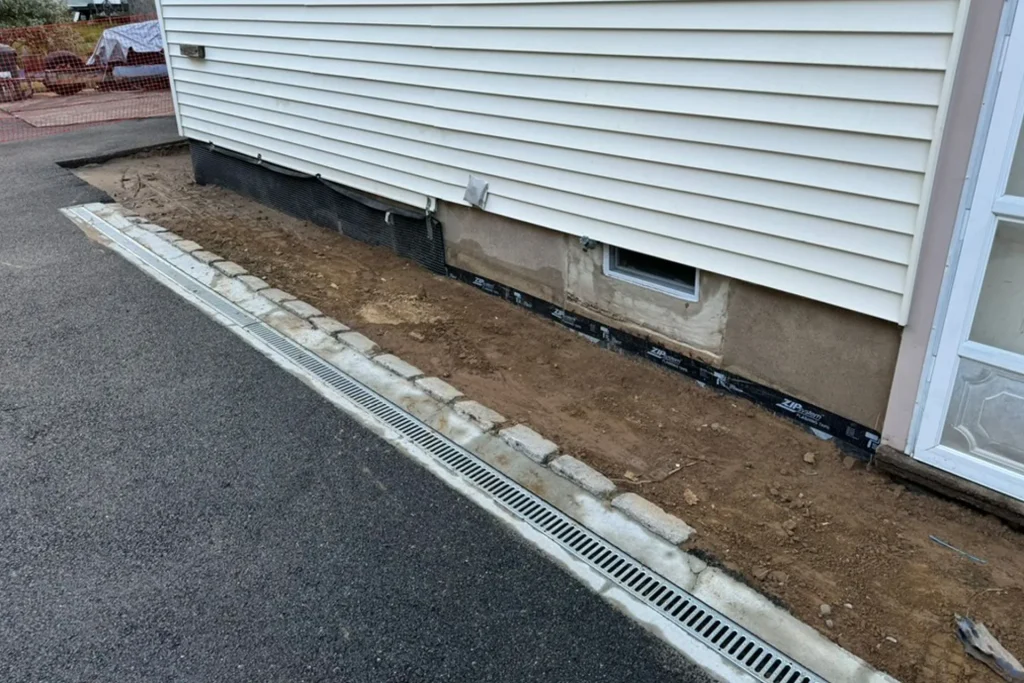
Waterproofing is the practical side of loss prevention. It includes exterior drainage improvements, crack repair, sump systems, interior drain tile, vapor management, downspout extensions, grading correction, and in some homes window well protection. It may also include dehumidification and moisture control, which matter because not all basement water problems arrive as standing water. Some show up first as damp odors, peeling paint, rust on appliance feet, swollen trim, or efflorescence on masonry.
Insurance, by contrast, is a contract for specified covered events. It may pay for certain sudden damage after the fact. It generally does not pay to improve your drainage, regrade your yard, or install waterproofing systems because those are preventive measures and deferred maintenance corrections.
That distinction can feel unfair to homeowners, especially after they have suffered a loss. But from a practical standpoint, the lesson is straightforward. If your basement is vulnerable, waterproofing is often the only reliable way to control the most common causes of non-covered damage.
The policy language that deserves a close read
Most homeowners never read their policy until after a problem occurs. By then, they are trying to decode exclusions while a mitigation crew is tearing out wet drywall. A better approach is to review a few parts of the policy while the basement is dry.
Start with the declarations page and endorsements. Confirm whether you have sewer or water backup coverage, and if so, at what limit. In many cases the default endorsement limit is modest, sometimes five or ten thousand dollars. That sounds workable until you price out removal of soaked finishes, drying equipment, contaminated cleanup, replacement flooring, lower cabinets, and potential mold treatment. A finished basement loss can exceed that amount quickly.
Then look at exclusions involving seepage, groundwater, hydrostatic pressure, flood, and repeated leakage. Also check whether sump pump overflow or failure is addressed https://www.google.com/maps?cid=15618896523686751270 directly or only through a backup endorsement. Some policies use terminology homeowners interpret too broadly. If the language is unclear, ask your agent for a written explanation and keep that communication.
Another area that gets overlooked is valuation. Even when a claim is covered, reimbursement for personal property in the basement may depend on whether your policy uses replacement cost or actual cash value. If you stored older furniture, tools, exercise equipment, holiday decor, rugs, or electronics downstairs, depreciation can matter. The same applies to finished surfaces if the basement was improved years ago.
Insurance companies notice maintenance, even when they do not say it out loud
Homeowners are often surprised by how much the claim investigation focuses on the condition of the house before the loss. Adjusters and field inspectors pay attention to cracked walls, prior patching, staining lines, mold patterns, grading, gutter overflow, and whether the sump pit and discharge line appear maintained. They are not looking for reasons to deny a valid claim so much as trying to determine cause and duration.
A basement with obvious long-term moisture issues is harder to present as a sudden event. If there are water marks from prior incidents, rotted base trim, peeling wall panels, or a dehumidifier that has been running nonstop for years, the insurer may argue the loss developed over time. That can affect not just coverage but also mold-related payment, since mold tied to long-term moisture is commonly restricted.
This is one reason good Basement Waterproofing work has value beyond keeping the floor dry. A basement with documented corrective measures, clean walls, maintained drainage, and service records presents a different picture from a basement that has clearly struggled for years. You are not just reducing the chance of a loss. You are creating a more defensible record if a covered event does happen.
Exterior water management is often the cheapest protection you can buy
Homeowners frequently jump to major interior systems before fixing simpler exterior issues. Sometimes that is necessary, especially when the home sits in heavy clay soil or below grade and hydrostatic pressure is significant. But I have seen many wet basements improve dramatically after routine site corrections.
A downspout that dumps water two feet from the foundation can move astonishing volumes into the soil around the basement wall. Add clogged gutters and a negative grade near the house, and you have built a water delivery system aimed directly at your foundation. The resulting seepage may look like a mysterious basement problem when it is really a roof drainage problem.
Proper grading, downspout extensions, gutter maintenance, and window well management often cost far less than major reconstruction. They also help protect claim eligibility because they show ordinary care. Insurers expect these basics. If runoff from your own roof is repeatedly feeding water against the foundation, that will not look accidental.
The sump pump question that too many people answer too late
When homeowners ask whether they need a sump pump, the better question is usually whether they can afford not to have one. In many basements, especially finished basements, a sump system is a practical layer of defense, not a luxury item. But a sump pump only helps if it is sized appropriately, maintained, and backed up for power outages or primary pump failure.
Storms that produce groundwater pressure are also the storms most likely to knock out power. That is why a battery backup or water-powered backup system deserves serious consideration where conditions allow. If your entire waterproofing plan depends on a single electric pump with no backup, you have a weak point exactly where you can least afford one.
Insurance may or may not help if the pump fails. Some policies require a specific endorsement for overflow or backup-related losses. Others may cover resulting damage in narrow circumstances but not the failed equipment itself. If you rely on a sump pump as part of your Basement Waterproofing strategy, pair it with both maintenance and policy review.
Finished basements raise the financial stakes
An unfinished basement with concrete floors and open walls is not immune to damage, but recovery is usually simpler. A finished basement turns water intrusion into a much larger insurance and waterproofing issue. Flooring traps moisture. Drywall wicks water upward. Insulation holds dampness. Built-ins, trim, media equipment, and furniture increase the contents claim. A minor water event can become a major remediation job.
This matters when deciding how aggressively to waterproof and how much backup coverage to buy. If the basement contains only utilities and storage on shelves raised off the floor, your tolerance for risk may be higher. If it contains a family room, bedroom, office, bathroom, or home gym, the same water event can cost several times more.
I once walked through a basement where the owner had spent years creating a comfortable lower-level suite. The finishing work was attractive and expensive, but the original vulnerabilities remained. The downspouts were short, there was no battery backup on the sump, and no one had checked the water backup endorsement limit since buying the home. A summer storm produced a loss that far exceeded the rider. The expensive part was not the standing water. It was the finished materials that had to come out after.
What to document before there is ever a claim
One of the smartest habits a homeowner can build is a simple paper trail. Insurance disputes often turn on whether you can show what condition the basement was in before the incident and what preventive measures were taken.
- Keep invoices for waterproofing work, sump installation, crack repair, drainage improvements, and annual service.
- Take dated photos of the basement when it is dry, including walls, floors, mechanicals, and stored belongings.
- Save maintenance records for gutters, downspouts, and sump pump checks.
- Photograph valuables and keep a rough inventory of basement contents.
- Store policy declarations and endorsements somewhere easy to access during an emergency.
These steps are not glamorous, but they can save a claim. If an adjuster sees a clean, documented history of maintenance and a clear record of improvements, you are in a much stronger position than a homeowner trying to reconstruct events from memory while hauling out wet boxes.
What to do right after basement water shows up
The first few hours matter, both for damage control and for the insurance record. Safety comes first. If water is near electrical systems, panels, or appliances, do not step into standing water until the area is safe. If the source is active, shut off what you can safely shut off or call for emergency help.
Then move quickly. Water mitigation companies are expensive, but delayed action can be more expensive if materials sit wet long enough to trigger mold growth or structural deterioration. Insurers expect reasonable steps to protect the property from further damage, even while coverage is being reviewed.
Document as you go. Take photos and video before large-scale cleanup if it is safe to do so. Capture the water line, affected items, the apparent entry point, and any relevant exterior conditions such as overflowing gutters or ponding near the foundation. Keep samples of damaged materials if asked. Save receipts for emergency mitigation, pumps, fans, hotel stays if applicable, and temporary repairs.
Be careful with statements about cause if you are not sure. Homeowners sometimes weaken their own claim by guessing. Saying “this always happens” or “the wall leaks every spring” may be accurate, but it can also frame the event as a long-term issue. Stick to observed facts until the cause is confirmed.
Older homes, newer homes, and why age changes the conversation
Older basements often leak for reasons that have little to do with neglect. Construction methods, aging mortar, shallower footings, older drain systems, and decades of settling can all contribute. An older home may need more robust Basement Waterproofing simply because it was not built to modern expectations for below-grade moisture control.
Newer homes are not immune, though the problems are often different. Improper grading after construction, clogged perimeter drains, poor window well drainage, or fast finishing before the concrete fully cured can create moisture trouble surprisingly early. I have seen newer finished basements develop musty odors within a few seasons because the water management details outside were sloppy.
Insurance does not necessarily care whether the vulnerability came from age or a construction oversight. It still focuses on the event, the cause, and the policy language. That is why even buyers of newer homes should not assume the basement is a solved problem.
Waterproofing contractors and insurance professionals speak different languages
A good waterproofing contractor looks at water pathways, soil pressure, drainage behavior, building materials, and practical fixes. An insurance adjuster looks at cause of loss, policy triggers, exclusions, and scope of damage. Both perspectives are useful, but they are not interchangeable.
Contractors may say, correctly, that hydrostatic pressure is forcing water through the cove joint. The insurer may hear, also correctly within policy terms, that groundwater intrusion is excluded. A homeowner caught between those views can feel like everyone agrees on the physical problem while no one agrees on payment.
The best way to navigate this is to treat diagnosis and coverage as separate conversations. Get a clear explanation of why water entered. Then compare that cause to your policy wording. If the loss is significant and the decision is disputed, it may be worth consulting a public adjuster or coverage attorney, depending on the amount at stake and the laws in your area. That is not necessary for every claim, but it is sometimes justified when the numbers are large and the cause is debatable.
The practical trade-off: spend now or risk spending later
Homeowners often hesitate at the cost of waterproofing because it can be substantial. Minor exterior drainage improvements may run in the low thousands. A sump installation, crack injection, interior drain tile system, or larger exterior excavation can climb much higher depending on the house and region. There is no universal answer to whether it is “worth it.” The decision depends on the basement’s history, the home’s layout, what is stored or finished below grade, and your tolerance for repeat events.
But the insurance angle changes that math. If the most likely water problems in your basement are exactly the ones your policy excludes, then delaying waterproofing is not just accepting inconvenience. It is accepting largely self-insured risk. Many homeowners do not realize that until after the first denial.
On the other hand, not every damp smell justifies a full perimeter system. Sometimes the right answer is targeted repair, better exterior drainage, and humidity control. Good judgment matters. A trustworthy contractor should explain what problem each proposed measure solves and what it does not solve. If someone recommends a very expensive system without discussing grading, gutters, discharge routes, and wall conditions, be cautious.
What smart homeowners review once a year
Basement risk changes over time. Trees mature, grading settles, drains clog, pumps age, and policy endorsements get forgotten through renewals. A quick annual review is usually enough to catch the obvious vulnerabilities before they turn expensive.
Walk the exterior during a hard rain if you can do so safely. Watch where roof runoff goes. Check whether water ponds near the foundation. Test the sump pump. Look at the discharge location. Open the basement door and trust your nose. A persistent damp or earthy smell often tells the truth before your eyes do.
Then review the policy. Not every year brings major changes, but enough can change in a household that the old limits no longer fit. A basement office, upgraded flooring, new furniture, or a remodeled lower level can make yesterday’s endorsement limit inadequate.
Basement Waterproofing and insurance work best together when they are treated as parts of the same risk plan. One reduces the chance of damage. The other softens the financial hit from the kinds of damage the policy actually covers. Homeowners who understand that distinction tend to make better decisions, ask better questions, and face fewer ugly surprises when the weather turns or the water rises.
ARD Waterproofing
98 Smull Ave, West Caldwell, NJ 07006, United States
+1 917-691-8411
FAQ About Basement Waterproofing
Can you 100% Waterproof a Basement in West Caldwell?
A properly designed system can substantially reduce basement water intrusion, but no method can promise protection against every flood, equipment failure, or future change in site conditions. The first step is identifying whether moisture comes from surface runoff, groundwater, plumbing, or condensation. Solutions may include grading and gutter improvements, drainage, foundation repairs, and a sump system. Review the specific coverage and exclusions of any written warranty.
How much does it cost to professionally waterproof a basement in NJ?
There is no single price that fits every basement. Cost depends on the cause of the leak, the area needing work, access, excavation requirements, drainage design, sump equipment, and restoration of disturbed finishes or landscaping. Request an on-site assessment and an itemized written estimate that explains the scope, exclusions, and maintenance requirements before comparing proposals.
How long does foundation waterproofing last in West Caldwell, NJ?
Service life varies with the waterproofing materials, installation quality, soil and water conditions, and maintenance. Drainage components and pumps may require servicing or replacement even when other parts of the system remain functional. Keep gutters, drainage outlets, and sump equipment maintained, and have recurring leaks or changes in foundation condition assessed. Ask for product-specific expectations and written warranty terms rather than relying on one lifespan for the entire system.